The reason a Sicilian estate is consulting with Giampiero Bea is the place to start, because everything else at Il Censo follows from it. Gaetano Gargano spent most of his working life as a banker in Rome. He came to wine first as a drinker — specifically, as a customer of the Beas in Umbria, where Paolo Bea had been making Sagrantino di Montefalco under principles most of the wine world has only recently begun to take seriously. Customer became friend, friend became student. And when Gaetano decided to do something with the family land in Bivona — sixty-five hectares of high country in south-central Sicily that had been progressively abandoned through the second half of the twentieth century — he asked Giampiero to direct the planting.
That is how a vineyard ends up at seven hundred meters of elevation, on volcanic outcropping, planted to Catarratto and Perricone. It is not where consulting agronomists tell you to plant in Sicily. It is where the geology and climate happen to be best for the specific things Bea cares about: slow ripening, real acidity, indigenous grapes that mean something to the actual ground they're standing on. The estate added Nero d'Avola and Malvasia Nera in a second planting, certified the whole agricultural enterprise organic in 2014, and farms biodynamically. The wines are made by Bea methods: indigenous yeasts, no temperature control, no fining, no filtering, minimal sulfur. None of this is incidental. It is the entire reason these wines taste the way they do.
The Praruar — a Catarratto with twenty days of skin contact and a year in stainless — is the wine that explains the project. Catarratto is a workhorse grape in Sicily, blended into anonymous bulk wine for centuries. In Bea's hands, at this elevation, with this farming, it becomes a wine of real architecture: textured, savory, capable of aging, useful at a serious table. The Njuro, a varietal Perricone (the dialect name is njuro cane — black dog), shows what Perricone can do when no one is asking it to be Nero d'Avola. The Provvido does the same favor for Nero d'Avola itself. The Gurte, an Insolia from a small parcel, is the wine the Beas drink with their own lunch.
The vines are nine of those sixty-five hectares. The rest is a hundred-year-old olive grove of Biancolilla, Cerasuola, and Murtiddara that Gaetano has restored to organic production, and fields of Tumminia — an ancient Sicilian durum wheat that survived industrial consolidation in only a handful of places, now grown by people who care about Sicilian bread the way some people care about Sicilian wine. Five hundred liters of unfiltered olive oil leave the estate annually. Tumminia goes to the bakers who know what to do with it. The vineyards are the most visible part of an agricultural project that is genuinely about the agriculture.
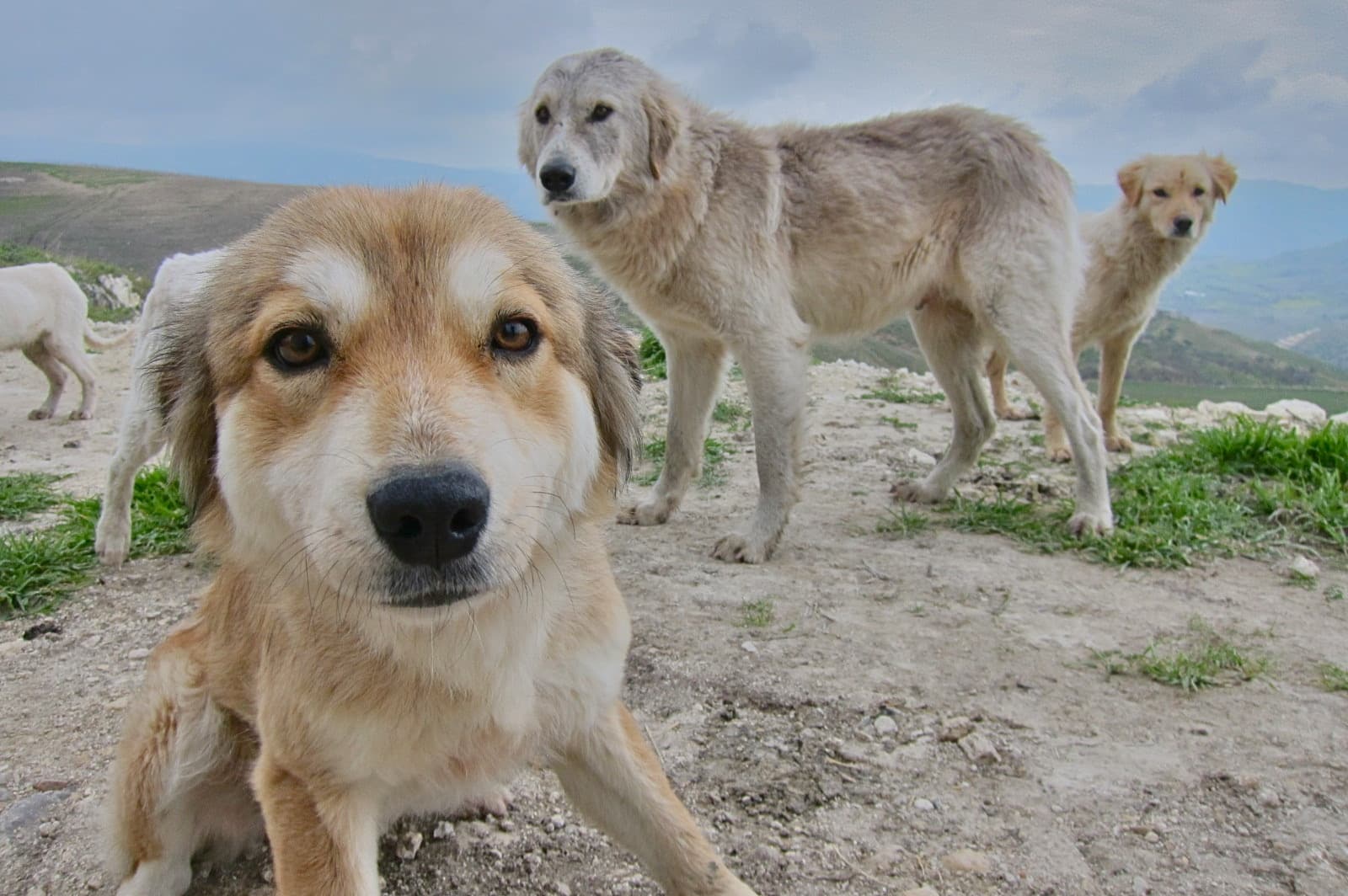
Most has changed since that first visit. The winery is no longer crumbling walls; the new plantings have come into full production; the olive oil reaches the United States in tiny quantities; the durum wheat is being harvested at scale. The slab, presumably, is somewhere underneath all of it. The shepherd's dogs would be old by now, if they're still around. We hope they are.